

Amazon FBA Toy Sourcing Guide: From China Factory to Prime Shelf
Selling toys on Amazon remains one of the most accessible e-commerce businesses to start — and one of the easiest to get wrong at the sourcing stage. Between CPSIA paperwork, FBA fee structures that changed again in January 2026, and lead times that quietly eat your cash cycle, the gap between a profitable toy listing and a stuck-in-warehouse money pit is mostly decided before your first purchase order. This guide walks the full pipeline of Amazon FBA toy sourcing: from choosing what to buy in China, through compliance and freight, to a realistic unit-cost stack that tells you whether a product deserves shelf space.
For a channel-by-channel comparison, see our roundup of top wholesale squishy toy suppliers for 2026.
Amazon sellers face two gates: compliance and cost — our CPSIA compliance guide and landed cost guide cover both.
Written by the King Squishy Sourcing Team — we run a sourcing desk inside Yiwu International Trade City and prepare FBA-ready documentation for toy buyers in 80+ countries.
Quick answer: To source toys for Amazon FBA from China: pick a lightweight, non-licensed product with proven demand; verify CPC (ASTM F963) and EN71 certification tied to real batches; buy a test batch of a few hundred pieces; ship DDP so duties are prepaid; then price against the full stack — landed cost plus roughly 15% referral plus per-unit fulfillment fees — before committing to volume.
Why Toys Are Tempting — and Technically Demanding — on Amazon
The demand side is genuinely attractive. The U.S. toy market generated $30.3 billion in retail sales in 2025, growing 6% year over year according to Circana retail tracking — a sharp rebound after two flat years, and proof that category demand survived the post-pandemic normalization.
The supply side is where sellers stumble. Toys for children sold in the United States fall under the Consumer Product Safety Improvement Act (CPSIA), which requires third-party testing and a Children’s Product Certificate citing the applicable safety rules, per the CPSC. In practice that means ASTM F963 toy-safety testing, lead limits, and small-parts warnings for products intended under certain ages — the small parts regulation at 16 CFR Part 1501 alone disqualifies many appealing designs for under-3 listings. Amazon additionally runs its own compliance gates: listings in toy categories can be blocked until acceptable documentation is uploaded.
None of this makes toys a bad category. It makes supplier selection the whole game.
Step 1: Pick a Product That Survives the Fee Stack
FBA economics punish the wrong physical profile. Before anything else, filter candidates by:
- Weight and cube. Small standard-size units pay dramatically lower fulfillment fees than large or bulky tiers — squishies, mini fidgets and card-based games fit the sweet spot; boxed playsets often don’t.
- Price band awareness. Amazon’s 2026 fee schedule applies distinct treatment to items priced below $10 — official Seller Central guidance notes small standard-size products under $10 see a $0.12 per-unit fulfillment increase — so ultra-cheap units need either multipacks or higher price points.
- No licensing traps. Unbranded, original-design toys avoid IP complaints, which remain a leading cause of frozen toy listings.
- Compliance feasibility. If a design can’t pass ASTM F963 testing for its intended age grade, walk away early.
- Trend durability. A fidget shape with 18 months of search history beats whatever went viral last week.
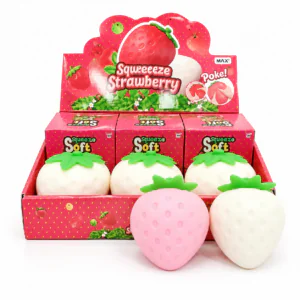
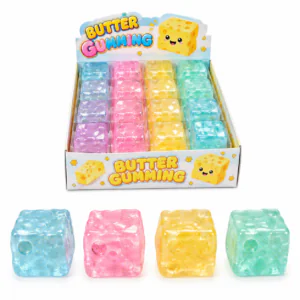
PU foam squishies illustrate the profile well: they weigh grams, pack dense (low freight per unit), retail between $5 and $15 comfortably, carry no licensing exposure when designs are original, and have held multi-year demand rather than single-season virality. Our materials comparison guide covers why PU foam dominates this niche.
Step 2: Source From Suppliers Who Already Speak Compliance
You have three routes: marketplaces like Alibaba, trading companies, or a sourcing desk embedded in the manufacturing market. We compared them honestly in Alibaba vs. a sourcing desk — for FBA sellers specifically, the decisive question is documentation quality:
- CPC referencing real third-party tests. The certificate must cite the correct CPSC rules for the product type. Ask which lab ran the tests and match report numbers to batches.
- Tracking labels. CPSIA requires batch-marking on children’s products — confirm your supplier prints them, not just promises them.
- Age grading honesty. Designs with small parts must be graded 3+ (or 6+, depending on test outcomes). Overclaiming an age grade to dodge small-parts rules is exactly how listings die.
- EU-ready duplicates. EN71 Parts 1–3 reports let you reuse the same SKU across Amazon EU marketplaces later — our certifications page shows the full document set we ship with every order.
A practical MOQ strategy follows directly: factories typically ask 200–500 pieces per design, but our desk holds MOQ one carton per SKU with one style per carton, because a first FBA shipment should prove demand — typically 200–300 total units across 3–6 designs — before any design earns a reorder. Our MOQ guide explains how a one-carton per-design MOQ makes this possible.
Step 3: Nail the Cost Stack Before You Order
Standalone takeaway: Profitable FBA pricing starts from the reverse equation: (target selling price − Amazon fees − landed cost − marketing) > 30% margin. If the unit economics only work at heroic sales prices, the product is wrong, not the pricing.
Here is a worked example with clearly labeled illustrative assumptions for one mid-tier squishy SKU:
| Line item | Illustrative value | Basis |
|---|---|---|
| Unit FOB price (Yiwu) | $1.00 | Live catalog mid-range ($0.59–$5.22 across collections) |
| DDP landed cost | ≈$1.25 | FOB + freight/duty spread across carton — model yours in our landed cost calculator |
| Selling price on Amazon | $9.99 | Category norm for branded-pack squishies |
| Referral fee (≈15%) | ≈$1.50 | Toys category rate — see Amazon’s fee change summary |
| FBA fulfillment fee | $3–$4 range | Small standard-size tier — verify current rates in the 2026 US FBA fee notice; fees changed January 15, 2026 |
| Gross margin after fees | ≈$3.75–$4.75/unit | Before PPC and returns allowance |
Two structural notes on those fees. First, Amazon’s 2026 fulfillment fee revision took effect January 15, 2026 — any spreadsheet built on 2024-era blog numbers is silently wrong, so always re-pull the current rate card during planning. Second, storage fees reward velocity: slow-moving toy inventory through Q4 peak season compounds costs, which argues for the test-small-reorder-big cadence described below rather than one heroic container.
Step 4: Ship With Lead Times You Can Actually Plan Around
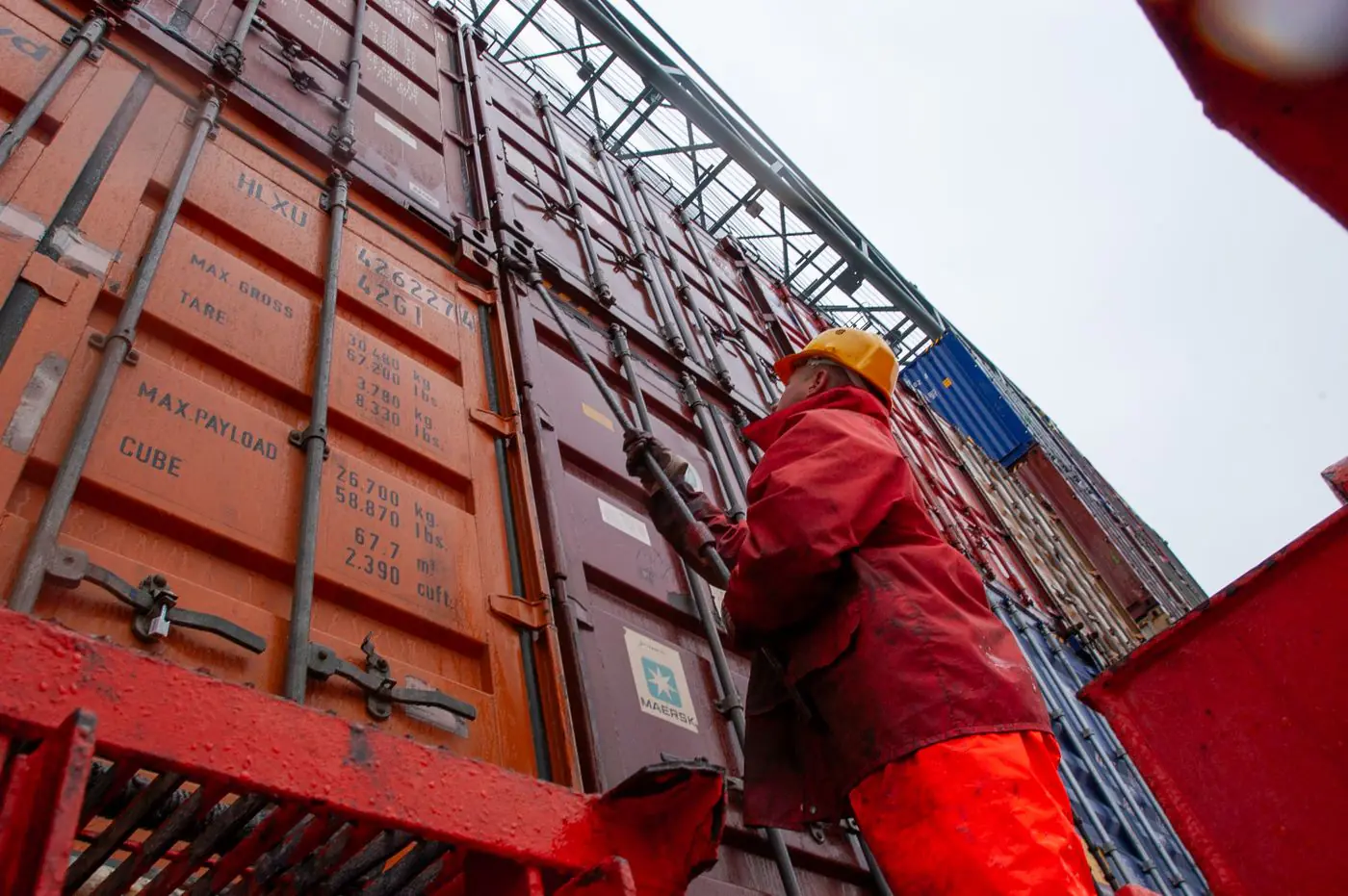
The classic first-timer failure is ordering stock timed for a season that has already passed. Realistic production-plus-transit planning from China looks like this:
| Stage | Typical duration | Note |
|---|---|---|
| Sampling | 3–7 days | Courier worldwide; sample fee creditable against bulk order |
| Production | 15–25 days | After golden-sample approval |
| DDP sea freight to US | 22–30 days | Duties prepaid — no surprise bills at the dock |
| DDP sea freight to EU | 25–35 days | Same door-delivery terms |
| Air freight alternative | 5–9 days | For trend-critical replenishment only |
That totals roughly 45–65 days door to warehouse on sea freight — meaning Q4 holiday inventory needs purchase orders signed by late summer. Our import logistics guide walks the five-step flow end to end, including the documents your freight forwarder will ask for.
Common Mistakes That Sink First-Time Toy Sellers
- Buying certificates instead of compliant products. A PDF that doesn’t trace to your actual production batch protects nobody — and Amazon’s document checks increasingly catch it.
- Ignoring age grading. Marketing a small-parts product to toddlers isn’t a gray area; it’s a recall letter waiting to happen under CPSC toy safety rules.
- One-container heroics. Betting everything on a single SKU-size bet locks your cash into whichever guess was wrong. Test at one-carton granularity, scale winners.
- Pricing off outdated fee tables. Fees changed materially in January 2026; recompute margins against today’s rate card every quarter.
- No reorder trigger. Define the sales velocity that triggers your next PO before launch, so stockouts never interrupt ranking momentum.
Frequently Asked Questions
Do I need CPC certification to sell toys on Amazon FBA?
Yes for children’s toys in the US market. CPSIA requires third-party testing and a Children’s Product Certificate citing the applicable rules (typically ASTM F963), and Amazon enforces document uploads in toy categories. Without it, listings can be blocked or removed.
What is the minimum order quantity for FBA-ready toys?
Factories commonly require 200–500 pieces per design. Our desk deliberately holds MOQ at one carton per SKU with one style per carton, letting a first Amazon shipment span multiple test designs for the same budget as one conventional factory run.
How much does it cost to source a toy from China for Amazon?
Beyond the unit price, budget for sampling, freight, duty (all folded into DDP), Amazon referral (~15% for toys), per-unit fulfillment fees from the current rate card, storage, and a PPC allowance. A $1.00 FOB squishy typically carries roughly $1.25 landed cost before Amazon-side fees in our illustrative models.
Can the same product work on both Amazon US and EU?
Only if it carries both markets’ documentation — CPC for the US and EN71 for the EU. Sourcing from a supplier who provides both batch-linked report sets means one SKU serves multiple marketplaces without re-testing.
How long does the whole sourcing-to-FBA cycle take?
Roughly 45–65 days door to warehouse on DDP sea freight (sampling 3–7 days, production 15–25 days, transit 22–35 days by destination), plus inbound receiving time at Amazon. Air freight compresses transit to 5–9 days when timing matters more than cost.
Are squishies still a good FBA category in 2026?
The fidget-toy segment they belong to was valued around $9 billion globally in 2025 with continued growth projected, and squishies’ light weight and dense packing suit FBA fee structures particularly well. As always, differentiation through packaging and original designs matters more than the base category.
Your Next Shipment Starts With One Test Wave
The sellers winning at FBA toys aren’t guessing less — they’re structuring bets so wrong guesses are cheap. Three designs, forty-eight pieces each, full compliance documentation, DDP to the warehouse: that loop proves demand before you’ve risked a container’s worth of capital.
Send us your target list and we’ll return itemized FOB and DDP quotes within 24 hours — or browse the full catalog to build one.
On the floor of Yiwu International Trade City since day one. Every guide is written from live wholesale experience — no AI fluff, no secondhand theory.
Related Guides
 Seasonal Toy Buying Calendar: When to Order for Holidays
 Sea Freight vs Air Freight for Toy Imports: Cost & Time
 Toy Import Duty Rates by Country: US, EU, UK & Australia
Shop Food Shapes Wholesale
Add these best-sellers to your next order.