

Chinese vs Vietnamese Toy Manufacturers: Cost & Quality
“Should I source from China or Vietnam?” has become the default opening question of every sourcing conversation since the China-Plus-One wave. For toy buyers the honest answer is category-dependent — and for squishy toys specifically, the answer is clearer than most consultants admit. This comparison walks through cost drivers, cluster depth, compliance maturity and speed, ending with a category-by-category verdict instead of a slogan.
Whichever country you pick, supplier vetting is everything — learn to read a toy factory audit report, then follow our complete China sourcing guide for the full process.
Quick answer: Vietnam offers meaningfully lower labor rates and growing capacity — a strong pick for sewing-intensive soft goods like plush. China keeps an unmatched grip on molded PU foam, TPR and vinyl toys: the mold shops, paint houses, material suppliers and compliance labs sit within hours of each other in Zhejiang and Guangdong, which is why squishy production stays there even as other categories migrate.
The Five Factors That Actually Decide
| Factor | China | Vietnam |
|---|---|---|
| Labor cost | Higher, especially coastal provinces | Meaningfully lower; the headline advantage |
| Toys cluster depth | Unmatched — full supply chain per category | Growing but shallower; fewer specialty inputs |
| Mold & tooling speed | Days-to-weeks, dense tooling ecosystems | Often dependent on Chinese or imported tooling |
| Compliance infrastructure | Deep bench of CPSC-accepted & EN71 labs, IETP factories | Improving; fewer toy-accredited labs |
| Tariff exposure to US | Section 301 stacks apply to many lines | Generally lower exposure on many goods |
McKinsey’s supply-chain research frames the whole movement correctly: brands adopt China-Plus-One primarily for resilience and risk diversification, not simple wage arbitrage — because factory quotation is only one layer of landed cost once materials, logistics and defect rates are counted.
Why Squishy Toys Stay in Zhejiang and Guangdong
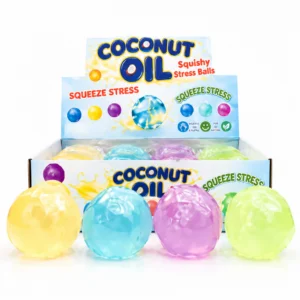
Standalone takeaway: A slow-rise squishy passes through four specialized trades — PU foam molding, roto/paint finishing, fabric or detail printing, and small-parts assembly — plus a lab loop for phthalate and heavy-metal panels. Yiwu and Shantou run all five inside one logistics day; moving one step abroad typically re-imports it from China anyway.
That is the quiet truth behind many “made in Vietnam” plush-with-plastic-accessory toys: the sewing happens in Vietnam while eyes, squeakers, stuffing additives and tooling still originate from Chinese clusters. For buyers this shows up as quote structure — Vietnamese quotes for mixed-material toys often carry Chinese component line items inside them.
Speed and Order Economics From Our Desk
- Sampling: 3–7 days within the Yiwu ecosystem versus longer loops when tooling crosses borders.
- Production: 15–25 days standard for foam lines; comparable plush runs can be competitive in Vietnam at higher volumes.
- Test orders: one-carton MOQs exist because cluster proximity makes tiny waves economical; thin clusters need bigger runs to justify setup.
- Freight parity: both countries ship efficiently to US/EU — compare door-to-door math in our sea vs air freight breakdown, then add duty layers via the tariff table.
Verdict by Category
| Your product | Our call |
|---|---|
| Squishies, stress balls, squeeze toys | China — no viable alternative cluster today |
| Simple plush (single material) | Vietnam viable at volume; compare landed, not FOB |
| Mixed plush + plastic parts | China usually nets simpler QC and faster iterations |
| Vinyl collectibles / blind-box figures | China — tooling density decides |
| Risk-diversification second source | Qualify Vietnam for plush line items while keeping molded SKUs in China |
The practical play for most mid-size buyers is not switching countries but splitting them deliberately — and auditing whichever factory wins, using the checklist in our factory audit report guide. Start comparisons with real unit numbers on the landed-cost calculator.
Frequently Asked Questions
Is Vietnam cheaper than China for toy manufacturing?
Labor is directionally cheaper in Vietnam, but total cost depends on the category: molded and chemically finished toys depend on Chinese cluster infrastructure, so landed costs frequently favor China despite higher wages.
Why do squishy toys almost always come from China?
Because PU molding, paint houses, printing, assembly and CPSC/EN71 testing coexist within one region in Zhejiang/Guangdong — replicating that chain elsewhere reintroduces Chinese suppliers into the bill of materials.
What is Vietnam better at for toys?
Sewing-intensive soft goods at scale, with lower labor rates and reduced US tariff exposure on many lines — strongest for single-material plush rather than multi-process toys.
Should small buyers consider dual-country sourcing?
Only after volume justifies managing two QC loops; a practical first step is qualifying a second supplier within China before adding a cross-border second source.
On the floor of Yiwu International Trade City since day one. Every guide is written from live wholesale experience — no AI fluff, no secondhand theory.
Related Guides
 Top Wholesale Squishy Toy Suppliers 2026: Channels & MOQs
 Wholesale Toy Packaging: Custom Boxes, Labels & Inserts
 How to Create Your Own Fidget Toy Brand (2026 Guide)
Shop Stress Balls Wholesale
Add these best-sellers to your next order.