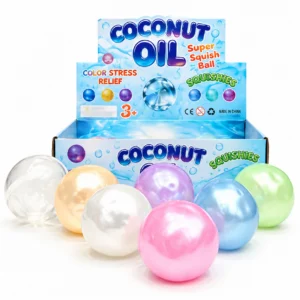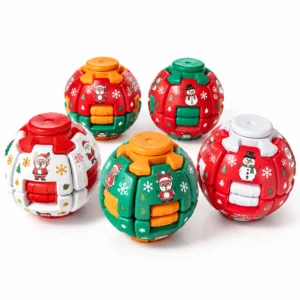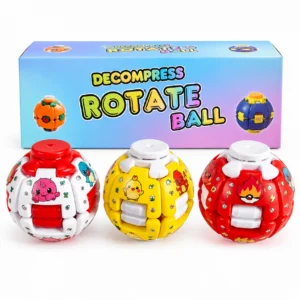


Retail Display Ideas for Fidget & Squishy Toys
Squishies are an impulse category wearing a toy’s costume: nobody walks into a store planning to buy a slow-rise strawberry, but nearly everybody squeezes one that’s within arm’s reach — and a squeezed squishy is already halfway sold. That single behavioral fact should drive your entire display strategy. This guide translates what we watch sell on market-stall tables every week into practical retail display ideas for fidget and squishy toys, whatever your floor size.
Choosing display-friendly unit sizes matters as much as the fixture itself — our fidget toy sizing guide by channel breaks down which sizes sell best where.
Quick answer: The highest-converting squishy displays put product at hand height, out of packaging, in dense colorful mass — open bins, tiered tables and checkout clusters beat locked cases and sparse shelves. Pair tactile access with clear price points ($2.99–$6.99 sweet spots for standard pieces) and refresh the visual layout monthly so repeat customers always see “new.”
Rule One: Touch Sells Squishies

Every other toy category can survive behind glass; this one can’t. The slow-rise squeeze is the demo, the advertisement and the hook simultaneously. Displays that invite handling convert browsers who never intended to buy; displays that forbid touching convert almost nobody. Practical implications:
- Keep at least one “squeeze me” piece per design family loose and accessible; hold backup stock sealed elsewhere.
- Dupes are fine — a slightly worn demo piece is the cost of doing business and costs less than any ad campaign.
- If theft is a concern, anchor the display near the counter rather than locking it: supervision beats enclosure for tactile categories.
The Five Display Formats That Move Product
| Format | Best location | Why it works |
|---|---|---|
| Open dump bin | Entrance, aisle ends | Treasure-hunt psychology; zero friction handling |
| Tiered riser table | Main aisle mid-store | Color-massed rows read as abundance from distance |
| Checkout cluster | Counter edge | Captures waiting hands; classic $3–$5 impulse zone |
| Pegboard strips | Along walls | Shows full design range vertically; easy face-up maintenance |
| Jumbo hero pedestal | Window or focal point | One oversized piece photographs like a $10 prize — pulls traffic inward |
The barbell logic from our 2026 trends report applies physically: cheap high-turn fillers fill bins by the hundred while a jumbo showpiece anchors attention from across the store.
Merchandising Details That Compound
- Mass by color family, not by SKU. A rainbow gradient of buns reads as “abundance” from ten feet; a neat grid of mixed designs reads as clutter.
- Price with round clarity. Single-price zones (“Everything here $3”) outperform per-item sticker hunts for impulse buys — our catalog’s tight bands like stress balls at $0.83–$1.35 FOB support clean markup tiers.
- Sign the benefit, not the name. “Squeeze me — 3-second slow rise” teaches the interaction to strangers better than any character name.
- Face and fluff daily. Squished demos and gappy rows signal neglect; two minutes of morning maintenance preserves the abundance illusion.
- Rotate monthly. Move the bin, swap the color order, introduce new shapes — regulars should notice something changed. Deep collections like food shapes (66 designs) make rotation endless without reordering.
Standalone takeaway: In tactile impulse categories, display is not presentation of demand — it is the demand generator. Hand-height access, dense color mass, honest price signs and monthly rotation are the four levers that consistently lift sell-through.
Sizing Your First Display Order
A working starter ratio for a single checkout cluster or half-table: roughly 120–200 pieces spanning 8–12 designs, weighted toward sub-$1 average-cost pieces with two or three hero items for height. Our one-carton MOQ maps onto this cleanly — one style per carton, stacked to taste. Browse live price bands in our wholesale price list and model margins with the landed cost calculator before you commit shelf space.
Frequently Asked Questions
How do I display squishy toys to sell more?
Put them at hand height, unpackaged, in dense color-massed bins or tiered tables with clear single-price signage. Tactile access converts impulse sales; add one jumbo hero piece as a visual magnet and rotate the layout monthly.
What price points work best for impulse squishy sales?
Round single-price zones between $2.99 and $6.99 perform well for standard pieces, with jumbo items priced separately as premium heroes. Clean price signals matter more than maximizing per-unit margin in impulse zones.
How many pieces do I need for a good display?
A convincing checkout cluster or half-table runs about 120–200 pieces across 8–12 designs — enough to read as abundant without deep inventory risk, achievable within two to three of our cartons.
Should squishies be sold packaged or open?
Both: keep demo pieces open for squeezing and sell from sealed stock behind the display. Open handling drives conversion; sealed backups protect hygiene and give buyers a pristine piece.
On the floor of Yiwu International Trade City since day one. Every guide is written from live wholesale experience — no AI fluff, no secondhand theory.
Related Guides
 Five Below Squishy Toys: What Sells & How to Source
 Squishy Advent Calendar Wholesale: The 24-Day Dumpling Calendar
 Fidget Toys for Caregivers: You Need Stress Tools Too
Shop Stress Balls Wholesale
Add these best-sellers to your next order.