

Wholesale Fidget Toy Trends 2026: What’s Selling Now
Every wholesale buyer faces the same January question: which of last year’s winners will still sell — and whether retail giants like Target stock the trending brands, and what should fill the empty shelf space beside them? Guessing burns cash. This report assembles the 2026 signals that actually matter — market-size revisions from independent research firms, the U.S. retail rebound data, channel-growth numbers from the arcade industry, and assortment movements inside a live 164-SKU wholesale catalog — into a practical read on fidget toy trends for 2026 and what to stock next.
(For the category sizing behind these trends, see our full Squishy Toy Market Size & Growth report.)
Written by the King Squishy Sourcing Team — we walk Yiwu International Trade City weekly and watch new-tooling announcements months before they hit Western storefronts.
Quick answer: The global fidget toys market reached roughly $9 billion in 2025 and continues growing into 2026, led by slow-rise squishies, prize-channel demand from claw machines expanding at ~8.6% annually, sensory-positioned products for schools and therapy, jumbo “value-perception” formats, and original designs that sidestep licensing risk. Buyers who diversify across these five currents — mapped to squishy toy types — rather than chasing single viral shapes — capture the trend without betting the quarter on it.
The Macro Picture: Toys Are Growing Again

Start with the tide, not the waves. After two years of stagnation, U.S. toy industry retail sales returned to growth in 2025: $30.3 billion, up 6% year over year, according to Circana’s U.S. Retail Tracking Service as reported by The Toy Association. A rising category lifts well-stocked wholesalers disproportionately — retailers rebuild assortments confidently when the shelf is moving.
Within that, the fidget segment has matured far past its 2017 fad reputation. Mordor Intelligence sizes the global fidget toys market at $9.07 billion in 2025, rising to an estimated $9.68 billion in 2026; Fortune Business Insights independently pegs 2025 at $9.01 billion. When two research houses converge within 1%, the signal is real: demand normalized into a durable category, not a meme.
Trend 1: Slow-Rise Squishies Became the Category’s Center of Gravity
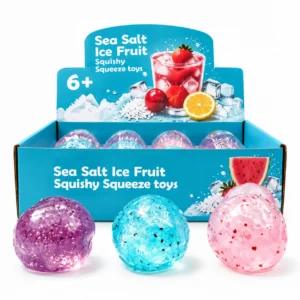
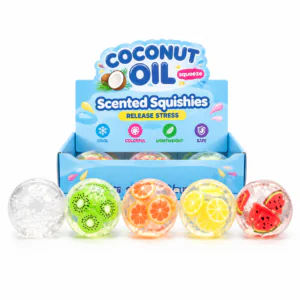
Squishies stopped being one novelty SKU among many and became the anchor purchase in stress-relief toy assortments. Two first-party observations back this: our food-shapes collection has grown to 66 active SKUs — the deepest assortment in our catalog — because factories keep tooling new molds while older designs keep reordering; and steamed-bun style slow-rise toys now span $0.59–$3.73 FOB with volume tiers, giving retailers margin room at every price point.
What to stock: classic buns, food shapes (strawberry, toast, mochi), and animal forms. See the live ranges in our wholesale price list.
Trend 2: The Claw Machine Channel Is Pulling Prize Demand Upward
Arcade economics are quietly becoming a major demand source for wholesale toys. Verified Market Research values the claw machine market at USD 2.66 billion in 2024, heading to USD 5.1 billion by 2032, and Business Research Insights models 8.6% compound annual growth through 2035. Every new cabinet consumes prizes weekly, and operators increasingly prefer dense, lightweight PU foam prizes over bulky plush.
What to stock: three-tier prize mixes — budget fillers ($1.03–$1.11 average cost tier), mid-tier heroes, jumbo showpieces. Our claw machine profit analysis breaks down the per-play math operators use to choose.
Trend 3: Sensory Positioning Expands Beyond Kids
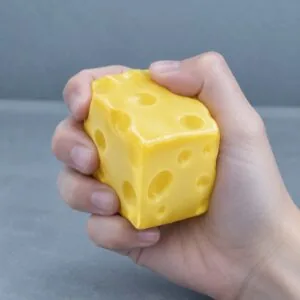
The fastest-growing buyer descriptions we hear from B2B customers no longer say “toy store.” They say school resource rooms, therapy practices, office retail, and subscription boxes. Fidget products originally marketed to children now sell through sensory-focused wholesale guides aimed at schools and therapists — a positioning shift that rewards calm colorways, quiet materials like TPR squeeze cubes ($0.84–$1.94 range), and durability over gimmicks.
This matters commercially because institutional buyers reorder on schedules, not impulses — smoothing the demand curve that pure-retail trends create.
Trend 4: Jumbo Formats Win the Value-Perception War
Inflation-conscious shoppers buy fewer units but still want gifting moments. The market’s answer: oversized single items whose perceived value outruns their cost. Jumbo slow-rise pieces at the $2.30+ FOB tier photograph like $10 gifts, work as premium claw prizes, and dominate social feeds where scale reads instantly on camera.
Standalone takeaway: In 2026 the winning shelf formula is barbell-shaped — cheap high-turn fillers at one end, few-but-dramatic jumbo showpieces at the other, with thin middles. Flat, uniform assortments underperform both ends.
Trend 5: Original Designs Beat Licensed Risk
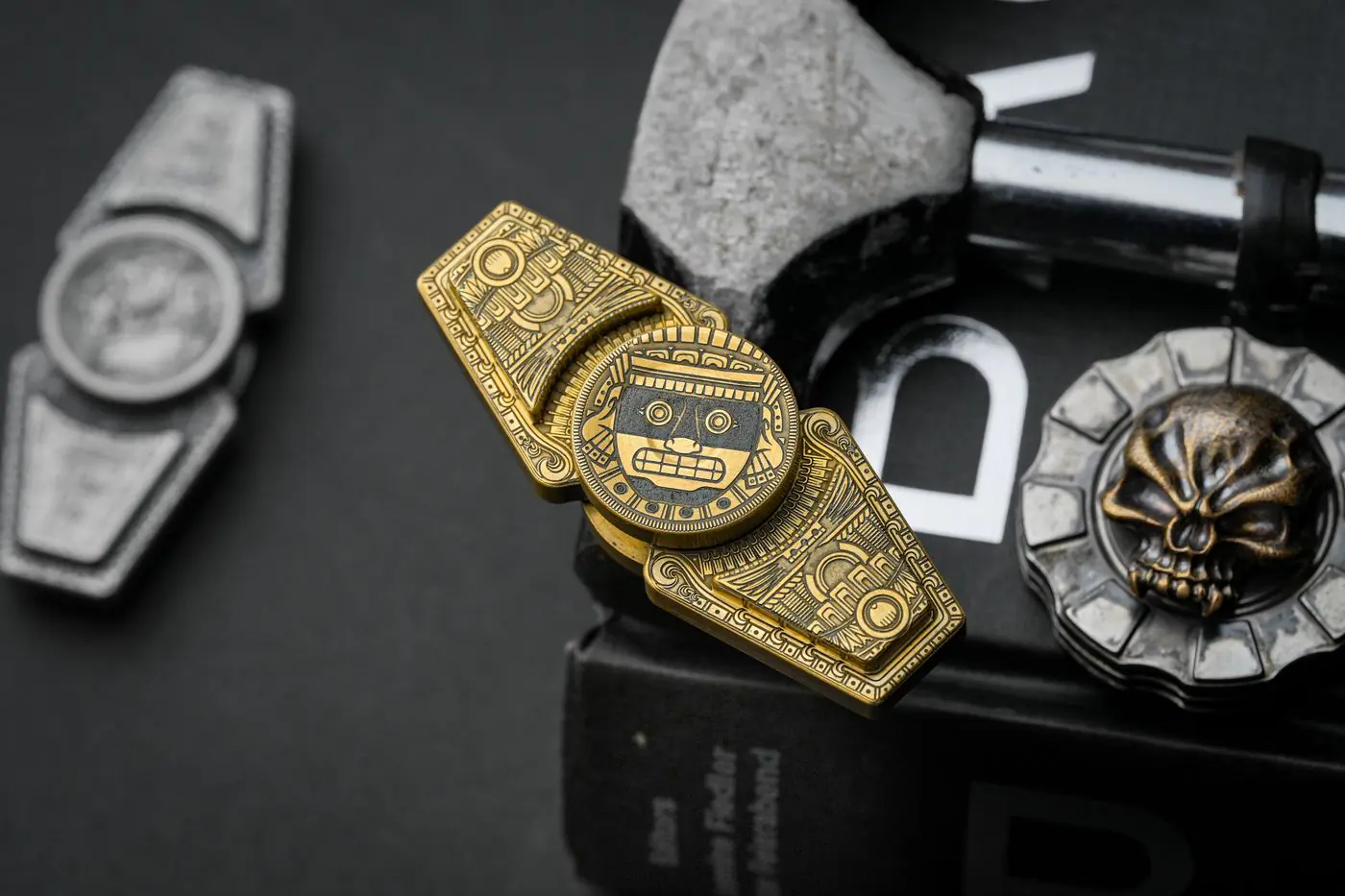
Licensing remains the silent listing-killer: IP complaints freeze Amazon listings and customs seizes infringing shipments. Meanwhile, original-character tooling costs have fallen enough that factories launch fresh proprietary designs monthly — visible directly in catalog velocity. Buyers increasingly ask for exclusive or semi-exclusive molds via OEM programs (logo printing from 500 pcs, custom packaging from 1,000 pcs) so their bestsellers can’t be undercut by identical stock two stalls over.
Compliance documentation matured alongside: batch-linked CPC and EN71 reporting is now standard expectation among serious buyers rather than a premium add-on — our certification guide explains what to require from any supplier.
Category Watchlist for 2026 Ordering
| Collection | 2026 outlook | FOB range | Order trigger |
|---|---|---|---|
| Food-shape squishies | Deepest assortment, steady refresh | $0.68–$2.61 | Monthly bin rotation programs |
| Steamed buns (slow-rise) | Anchor SKU family, social-media staple | $0.59–$3.73 | Always-in-stock core |
| Bears & animals | Jumbo/premium tier growth | $0.72–$4.47 | Gifting seasons + prize walls |
| Squeeze cubes | Sensory/institutional demand | $0.84–$1.94 | School/therapy reorder cycles |
| Stress balls | Promo-channel staple, stable | $0.83–$1.35 | Logo-print programs |
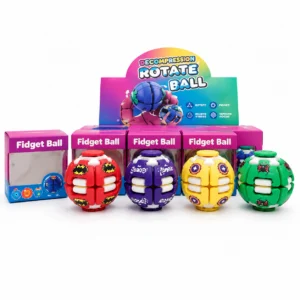
| Novelty & fidget mechanisms | Trend-driven upside | $0.78–$5.22 | Test waves at one carton per design |
How to Buy the Trend Without Betting the Quarter
- Split budget 50/30/20 between proven anchors, emerging collections, and experimental test SKUs.
- Use test waves: 6 designs × one carton each measures real capture before any design earns volume-tier pricing.
- Time Q4 orders by August: sampling plus production plus DDP sea freight totals 45–65 days door-to-warehouse.
- Demand batch-linked certificates with every order so retail audits never stall.
- Watch your own sales data, not TikTok — by the time a shape trends publicly, factory lead times mean you’ll arrive after the peak.
Frequently Asked Questions

What fidget toys are trending in 2026?
Slow-rise squishies (especially food shapes and buns), jumbo oversized formats, sensory-positioned squeeze cubes for school and therapy channels, and original-design prizes feeding the growing claw machine channel — all supported by a fidget market sized around $9 billion globally in 2025.
Is the squishy trend fading?
No — it has normalized into durable category demand. Independent estimates converge near $9 billion for 2025 with continued growth into 2026, and assortment depth (new mold launches monthly) indicates supplier confidence, which historically precedes sustained retail demand.
What should I stock for Q4 2026?
A barbell mix: high-turn budget fillers, gift-positioned animal and jumbo squishies, and a small experimental wave of novel mechanisms. Place orders by late summer — production and DDP sea freight alone run 40–60 days.
Are licensed-character toys worth the risk?
For most small-to-mid wholesalers, no. Unlicensed originals avoid IP takedowns and customs seizures, cost less, and now offer comparable appeal thanks to rapid proprietary design cycles. Exclusive molds are available through OEM programs from 500 pieces.
What MOQ should I start with when testing a trend?
Small enough to be wrong cheaply. Our desk holds one carton per design with one style per carton — six test designs cost less than one conventional factory minimum run and generate real sell-through data within weeks.
Which certifications should accompany 2026 toy orders?
CPC referencing ASTM F963 testing for the US and EN71 Parts 1–3 for the EU, tied to production batch numbers with tracking labels. Treat missing paperwork as a dealbreaker regardless of price.
Position Early, Test Small, Scale What Moves
The 2026 playbook isn’t about finding one magic toy — it’s about structuring purchases so the market’s five concurrent currents each pay rent. With the U.S. toy market back to growth and the fidget segment holding a ~$9 billion base, the risk this year isn’t demand; it’s arriving late or over-committed.
Pick your barbell mix from the full catalog, request itemized quotes, and let a 288-piece test wave tell you what your customers actually want.
On the floor of Yiwu International Trade City since day one. Every guide is written from live wholesale experience — no AI fluff, no secondhand theory.
Related reading
Related Guides
 Five Below Squishy Toys: What Sells & How to Source
 Squishy Advent Calendar Wholesale: The 24-Day Dumpling Calendar
 Fidget Toys for Caregivers: You Need Stress Tools Too
Shop Stress Balls Wholesale
Add these best-sellers to your next order.