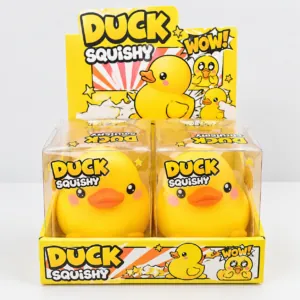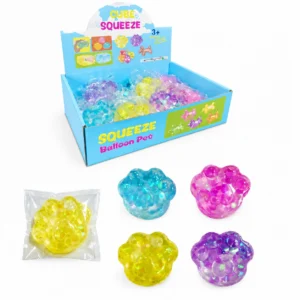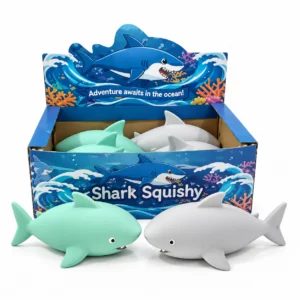


How to Start a Squishy Toy Subscription Box Business
Subscription boxes turn one-time toy buyers into twelve-payments-a-year subscribers — but only if the box delivers fresh delight every single cycle. That sourcing requirement makes squishies almost structurally perfect for the model: enormous design variety at low unit cost, light enough to mail profitably, and a steady factory pipeline of new shapes. This guide walks through launching a squishy subscription box in 2026 with real numbers: market context, unit economics, sourcing cadence, and the mistakes that kill most boxes before month six.
Subscription boxes live and die by inventory timing — our seasonal toy buying calendar maps the reorder windows for each holiday.
Quick answer: The global subscription box market reached roughly $41–50 billion in 2025-2026 with double-digit annual growth projected into the 2030s. A viable squishy box needs a landed cost-per-box around $4–$8, a retail price of $15–$25, and a monthly variety pipeline — achievable by mixing 6–10 new squishy designs per month at wholesale prices starting near $0.40–$1.20 per piece.
Why the Model Fits Squishies So Well
First, the macro tailwind is real: the subscription box market grew to an estimated $41.47 billion in 2025 and roughly $49.7 billion in 2026 according to Research and Markets, with long-range forecasts modeling double-digit compound growth above 16% annually through 2035 as consumer habits consolidate around curated recurring delivery.
Second, the product physics cooperate. The fidget-and-squishy category sits near $9 billion globally with new molds launching monthly — meaning your box can feature genuinely novel items every cycle without custom manufacturing. And unlike plush or board games, PU foam pieces weigh grams and survive postal networks without damage, keeping fulfillment costs close to the postage floor.
The Unit Economics That Decide Survival
Standalone takeaway: A subscription box lives or dies on (retail price − COGS − shipping − packaging − acquisition cost) × average lifetime months. Most failed boxes die not on product cost but on churn caused by repetition — which is a sourcing problem, not a marketing problem.
| Line item | Illustrative range | Note |
|---|---|---|
| Retail price | $15–$25/month | Category norm for kids’ collectible boxes |
| Squishy contents (4–6 pcs) | $1.60–$4.80 | Mix of $0.40–$1.20 average-cost designs |
| Packaging | $0.60–$1.50 | Custom-printed boxes from 1,000 pcs |
| Postage (domestic US) | $4–$6 | Lightweight small parcel |
| Gross margin left | ≈$7–$13 | Before ads and platform fees |
The sourcing lever dominates this table. Because our catalog spans $0.59–$5.22 FOB across collections with volume tiers at 500 / 2,000 / 5,000 pieces per SKU, a box operator can hold content cost under $1 per piece while still featuring jumbo hero items quarterly — the surprise-and-delight moments that drive social sharing and referral growth.
Step-by-Step: Launching Your Box

- Define the theme and age band. “Japanese food squishies” beats “squishy toys”; specific boxes sell, generic ones churn.
- Validate before inventory. Pre-sell 50–100 founder subscriptions or run a landing-page waitlist; our one-carton MOQ lets you assemble pilot boxes without factory-scale commitments.
- Build the month-one wow. Curate 5–6 pieces spanning budget fillers and one jumbo showpiece — unboxing video potential matters more than piece count.
- Lock a variety pipeline. Contract a monthly refresh: 6–10 new designs per cycle drawn from deep collections like food shapes (100 SKUs and growing), so month nine never repeats month two.
- Nail compliance paperwork once. Batch-linked CPC documentation covers your US subscriber base; EN71 if you ship EU-wide — required for children’s products regardless of business model.
- Price against lifetime value, not first box. If average subscriber life is five months, you can afford meaningful acquisition cost per signup.
- Institutionalize feedback. Survey which piece types drive replies; feed winners back into your next sourcing wave at volume-tier pricing.
Churn Is a Sourcing Metric
Here is what most subscription-box postmortems miss: cancellation surveys consistently cite “got boring/repetitive” among the top reasons subscribers quit. Your churn rate is therefore downstream of your supplier’s design velocity. Operators sourcing from single-SKU factories plateau within months; operators plugged into a live market desk keep a rolling novelty calendar — seasonal shapes, trending foods, fresh animal characters — that gives subscribers a reason to stay curious. Our OEM program even supports exclusive designs once volume justifies it, turning variety itself into a moat competitors cannot copy off a shelf.
Timing note for planning: production runs 15–25 days after sampling, then DDP transit adds 22–30 days to the US by sea — build an eight-week pipeline so each month’s box ships on schedule without air-freight panic. Our import timeline guide breaks the calendar down step by step.
Frequently Asked Questions
How much does it cost to start a squishy subscription box?
A lean launch — 100 pilot boxes with contents, packaging and initial ads — typically lands in the low four figures, because one-carton minimum orders let you assemble real variety without container-scale inventory risk.
Where do subscription boxes source their toys?
Most source from Yiwu’s wholesale ecosystem in China, directly from factories, or through a sourcing desk. A desk consolidates multiple factories into one shipment with unified compliance paperwork — essential when each box mixes designs from different specialty workshops.
What price should I charge for a squishy box?
The category norm lands between $15 and $25 monthly depending on piece count and exclusivity. Model backwards from a $4–$8 all-in cost per box to protect margin after postage and acquisition spend.
Do I need safety certificates for subscription box toys?
Yes — selling toys to consumers in the US requires CPC-backed compliance (ASTM F963 testing), and the EU requires EN71. Source from suppliers who provide batch-linked reports so every month’s box stays covered.
How many subscribers do I need to be profitable?
With healthy unit economics ($7+ gross margin per box after direct costs) and modest fixed overhead, a few hundred active subscribers typically reach sustainability; profitability scales with retention more than headline subscriber count.
On the floor of Yiwu International Trade City since day one. Every guide is written from live wholesale experience — no AI fluff, no secondhand theory.
Related Guides
 Five Below Squishy Toys: What Sells & How to Source
 Squishy Advent Calendar Wholesale: The 24-Day Dumpling Calendar
 Fidget Toys for Caregivers: You Need Stress Tools Too
Shop Bears & Animals Wholesale
Add these best-sellers to your next order.