

What Are Squishy Toys? A Complete B2B Guide
Quick Answer: Squishy toys are soft, compressible fidget toys made from PU foam, TPR, or silicone that slowly return to their original shape after being squeezed. Originally from Japan’s kawaii culture, they’ve become a global $3+ billion market. For wholesale buyers, squishy toys range from $0.20–$5.00 per unit with a one-carton minimum per style (the exact piece count is on each product page).
What Exactly Are Squishy Toys?
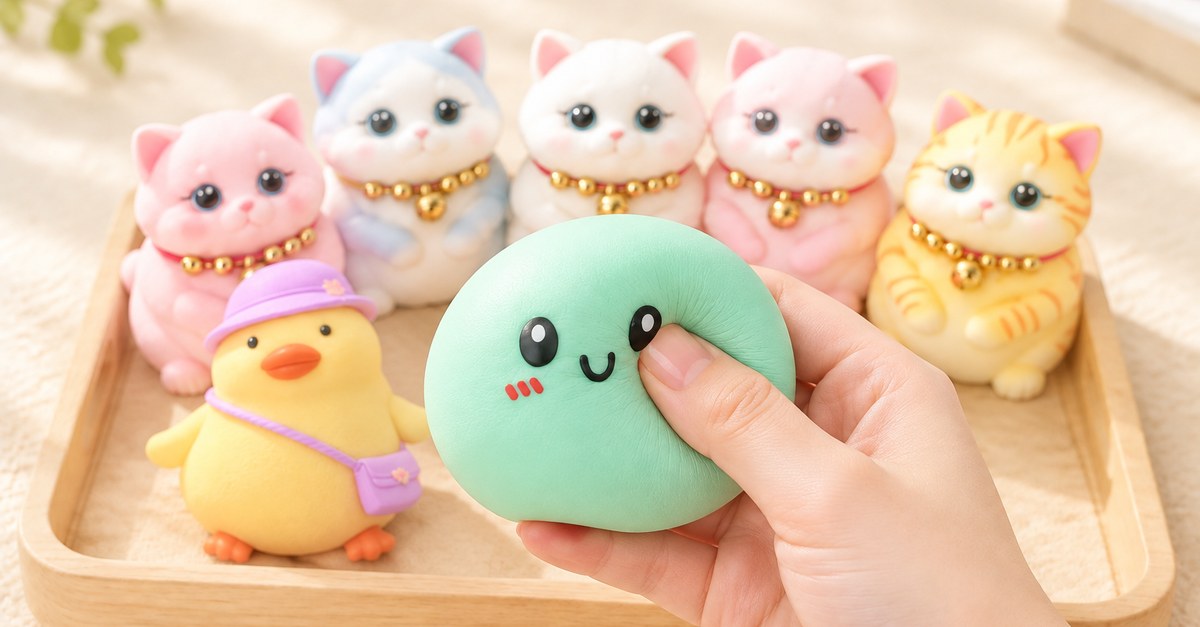
Squishy toys are soft, squeezable objects designed to be compressed by hand and then slowly return to their original shape. The “slow-rise” effect — typically taking 3–5 seconds — is what makes them uniquely satisfying and different from regular stress balls.
They are used for:
- Stress relief and anxiety management — both children and adults (see our fidget toys for kids with anxiety guide)
- Sensory stimulation — for autism, ADHD, and occupational therapy (sensory toys for kids with ADHD)
- Collecting — a massive hobby community worldwide
- Retail impulse purchases — checkout counters, gift shops, vending machines
- Claw machine prizes — high-margin, high-appeal prize items
The History: From Japanese Kawaii to Global Phenomenon
Squishy toys originated in Japan in the early 2010s as part of the kawaii (cute) culture movement. Japanese company San-X and later various Chinese manufacturers began producing slow-rise foam toys shaped like food, animals, and characters.
The category exploded globally through:
- YouTube unboxing videos (2014–2016) — satisfying squish videos went viral
- Five Below and Dollar Store expansion (2017–2019) — mass retail adoption
- TikTok ASMR trend (2020–present) — “satisfying squish” content drives impulse buying
- Therapeutic recognition (2022–present) — schools and therapists adopting sensory squishies
For market data and growth projections, read our Squishy Toy Market Size & Growth Report 2026.
How Squishy Toys Are Made
Understanding manufacturing helps buyers evaluate quality and pricing. For a detailed materials breakdown, see our Materials Guide.
Step 1: Mold Creation
A steel or aluminum mold is CNC-machined to the desired shape. Mold cost ranges from $200–$800 depending on complexity.
Step 2: Material Preparation
PU foam is mixed with a foaming agent and colorants. TPR is heated and colored. Silicone is mixed with curing agents.
Step 3: Molding & Curing
Material is injected or poured into molds and cured (heated to set). PU foam requires precise temperature control for consistent slow-rise effect.
Step 4: Demolding & Trimming
Finished pieces are removed from molds and excess material is trimmed by hand.
Step 5: Quality Control
Each batch is inspected for shape consistency, color accuracy, and squeeze feel. King Squishy provides batch photo records with every order.
Step 6: Packaging
Individual bags, display boxes, or custom packaging depending on the buyer’s requirements. See our Packaging Options guide.
Squishy Toy Materials Compared
The three main materials each offer different sensory experiences and price points:
| Material | Feel | Slow-Rise? | Durability | Price | Best For |
|---|---|---|---|---|---|
| PU Foam | Soft, airy | Yes (3–5 sec) | Medium | $0.30–$1.00 | Retail, claw machines |
| TPR | Stretchy, rubbery | Quick return | High | $0.40–$1.20 | Therapy, schools |
| Silicone | Firm, smooth | No | Very High | $0.60–$1.50 | Premium, therapy |
For a detailed comparison, read our TPR vs PU vs Silicone guide.
Squishy Toy Types & Categories
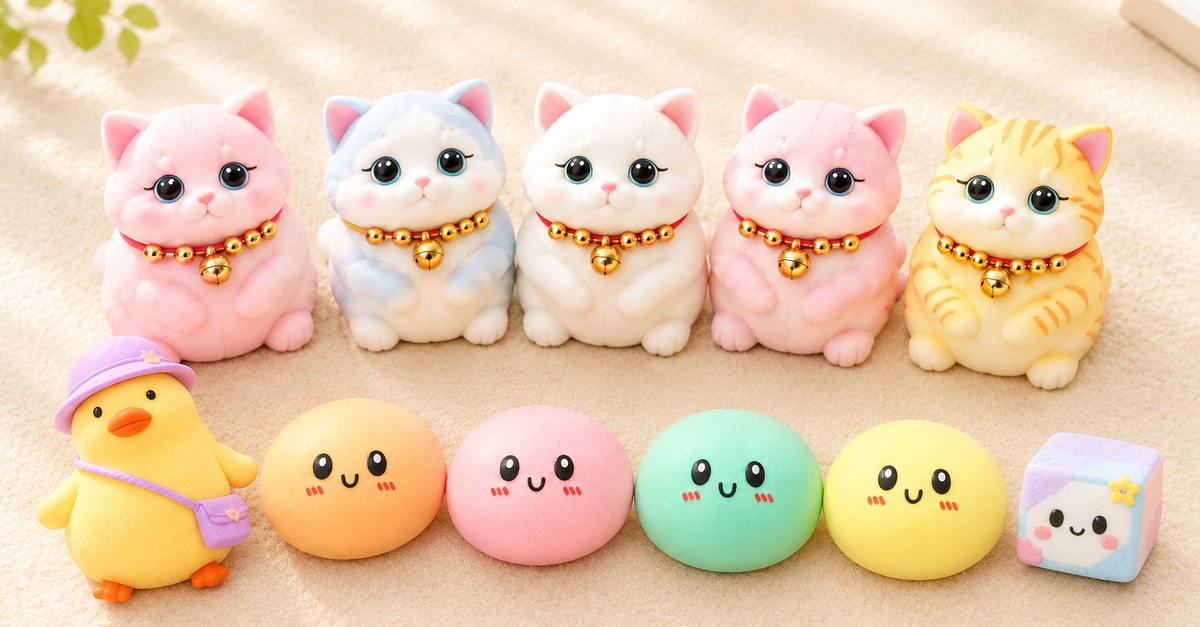
Squishy toys come in dozens of shapes and sizes. Here’s the breakdown by category:
- Food shapes — Dumplings, buns, fruits, bread, sushi (our largest collection with 198 SKUs)
- Animals & characters — Bears, cats, unicorns, fantasy creatures (70 SKUs)
- Steamed buns — Character buns with googly eyes, glow-in-the-dark variants (80 SKUs)
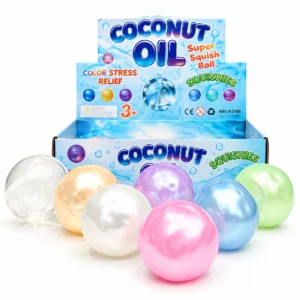
- Stress balls — Classic round or shaped squeeze balls (30 SKUs)
- Squeeze cubes — Multi-texture geometric fidgets (136 SKUs)
- Novelty & fidget — Pop-its, mesh balls, unique designs (16 SKUs)
For a complete breakdown, read our Types of Squishy Toys guide.
Why Squishy Toys Keep Selling in 2026
The squishy toy market continues to grow because:
- Universal appeal — All ages, all genders, all cultures
- Low price point — Impulse buy range ($1–$10 retail)
- Collectibility — Hundreds of designs encourage repeat purchases
- Social media fuel — “Satisfying” content generates free marketing
- Therapeutic validation — Schools and therapists officially recommend them
- Low wholesale cost — High margins for retailers (see our price list)
How to Source Squishy Toys for Your Business
Whether you’re a retailer, Amazon seller, claw machine operator, or distributor, here’s the sourcing process:
Step 1: Identify Your Target Market
Which channel will you sell through? Each channel has different size, price, and design requirements. Read our Sizing Guide for recommendations.
Step 2: Choose Your Product Mix
Start with 3–5 designs that match your customer base. Food shapes and animals are safe bets for most channels.
Step 3: Request Samples
Real production samples ship in 3–7 days. Sample cost is credited on your first bulk order.
Step 4: Place Your Order
MOQ starts at one carton per style (typically 144-360 pieces). Production takes 15–25 days.
Step 5: Receive DDP Delivery
Duties and taxes prepaid to your door in 80+ countries. US delivery in 22–30 days, EU in 25–35 days by sea.
For a complete sourcing walkthrough, read our Complete Guide to Sourcing Squishy Toys from China.
Are Squishy Toys Safe?
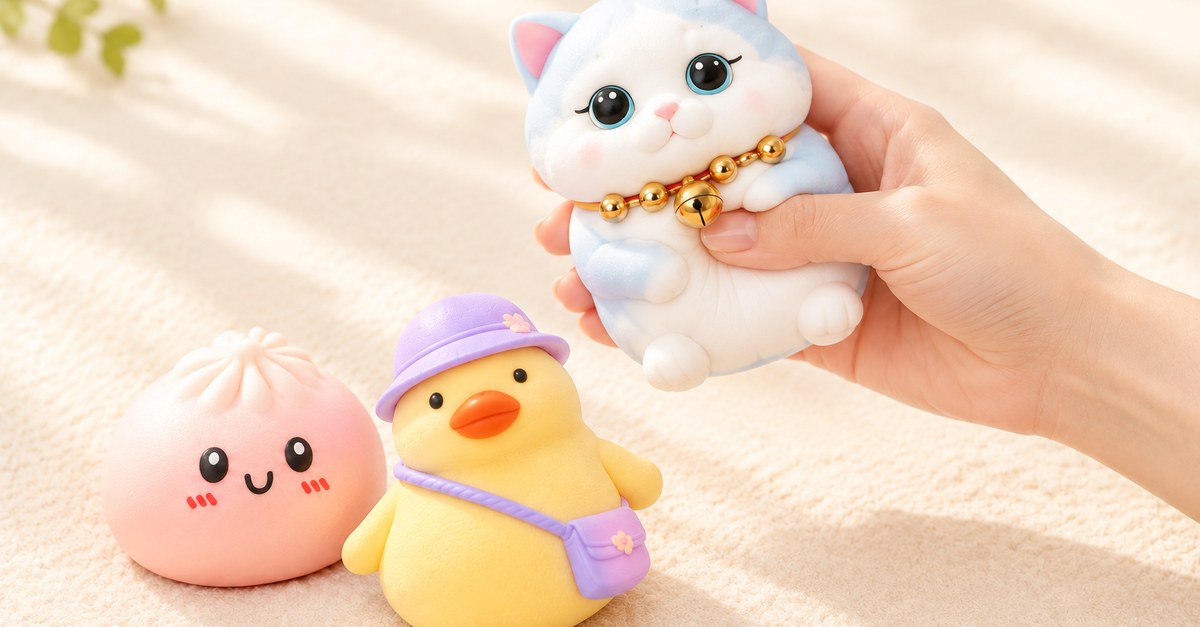
Yes, when sourced from certified manufacturers. Safety concerns are typically with unregulated, ultra-cheap products from unverified sources.
What to look for:
- CPC (Children’s Product Certificate) — Required for US market
- EN71 test report — Required for EU/UK market
- ASTM F963 — US toy safety standard
- Material testing — Free from harmful phthalates, lead, heavy metals
Every King Squishy order ships with CPC + EN71 documentation. For a complete safety overview, read our Toy Safety Standards guide and Amazon CPSIA compliance guide.
FAQ
What are squishy toys made of?
Most squishy toys are made from PU (polyurethane) foam, which creates the signature slow-rise effect. Other materials include TPR (rubber), silicone, and gel fills. Each material offers different sensory feedback and price points.
Why are squishy toys so popular?
Squishy toys combine stress relief, sensory satisfaction, and kawaii aesthetics. Social media “satisfying” content drives impulse purchases, while therapeutic recognition has expanded demand to schools and healthcare settings.
How much do squishy toys cost wholesale?
Wholesale prices range from $0.20 for mini squishies to $5.00 for large pillows, depending on size, material, and design complexity. King Squishy’s MOQ is one carton per style, typically 144-360 pieces.
Are squishy toys safe for children?
Yes, when sourced from certified manufacturers. Look for CPC (US) and EN71 (EU) certifications. All King Squishy products come with full safety documentation and are tested for harmful substances.
Where can I buy squishy toys in bulk?
You can source directly from Yiwu, China manufacturers like King Squishy, through Alibaba, or via sourcing agents. Direct sourcing offers the best prices with a one-carton minimum per style.
What’s the difference between squishy toys and stress balls?
All squishy toys can be considered stress toys, but not all stress balls are squishy toys. Squishy toys specifically refer to slow-rise foam toys that compress and gradually return to shape, while stress balls may be filled with gel, sand, or other materials.
Ready to Source Squishy Toys?
285+ certified SKUs, MOQ from one carton, DDP worldwide. Get itemized FOB + DDP pricing within 24 hours.
Related Guides
 Squishy Pillow Toys: The Soft-Selling Wholesale Category
 Fidget Toys for Teenagers with Anxiety: What Actually Helps
 Sensory Toys for After-School Programs & Afterschool Care
Shop Stress Balls Wholesale
Add these best-sellers to your next order.